Thursday, 31 March 2016

choreography essay


Discuss the unpredictability of chance procedures and how the movements discovered are often unusual and away from your comfort zone. Does the fact that you are leaving everything to chance not make you a choreographer, or is it still choreography because you are creating?


Beach Birds was created using Merce Cunningham’s chance procedures. Vaughan (2013) stated that “Cunningham dissected the human body with a computer mouse, breaking down the simplest gesture into composite parts.” Suggesting that the choreography would be completely unpredictable even to the choreographer himself.


Debating that chance procedures could have changed the identity of the work for example; the sharp movements could become soft, giving the performance a complete change in appearance, however would Beach Birds become popular if it was a different sequence of movements selected by chance?


In my view Merce Cunningham is still a choreographer; on account that he created a chance procedure of his own making it original to him. For instance curving of the spine movements were something that he wanted within his work and his chance procedure allowed this to become an option.

Furthermore Cunningham stated that we should Vaughan.D (2013)   “explore beyond the constraints of our imagination.” However I oppose this statement, In my opinion imagination does not restrict us, but the embedded preconceptions of  how dance should appear does.


Evidence demonstrates that successful choreographers can produce choreography solely from their imagination, as Ashley Banjo has achieved “Five sell out UK venues with 250,000 tickets soldDisruptLTD(2016) .  In my experience work that is made in this process has better audience connection. Lucid Grounds choreographed by Tamsin Fitzgerald was filled with emotions keeping me engaged. On the other hand work made with chance procedures, such as Yvonne Rainers Hand movie can become mechanical, as the focus of the work is on the process not the end product. I am more intrigued as to how they got to that outcome more than with the performance itself.


Having discussed this point I still do consider that Tamsin and Yvonne are both choreographers as both choreograph, though with different intentions. The effect they have on an audience fluctuates on what the audiences themselves are searching for, to be entertained or to be shown a work process.


William Forsyth’s definition of choreography: Speir.S (2011) “Organising bodies in space”… “Organising bodies with other bodies”... “Organising a Body with other bodies in an environment that is organised” He is supportive to the fact that both approaches of choreography are relevant, as they both abided by the above statements. The only differing factor being one outcome will be known and the other will be unpredictable.


I do not believe that one method makes a creator more of a choreographer than another, but it’s what you do with the movement material you accumulate. Also how you choose to present it helps to determine how well you choreograph.

In my personal experience I would have only used material that was produced  in my imagination, however since being introduced to chance methods I now choreograph using a mixture of the two approaches. Myself I particularly like the Locus cube that Trisha Brown developed, with the letters giving you direction and the numbers a movement. By having both numbers and letters it makes it difficult to cheat the score, in effect the outcome of the choreography is often unique and interesting.


After this process I tweak my material to my personal tastes. In my reflective blog I stated that when I use chance “It expands my movement vocabulary” Hodges.N(2016) This demonstrates that the unpredictability of the movements  have pushed me out of my comfort zone. It allowed me to discover new movements, showing that chance methods are a good choreographic tool to use and a lot can be learnt from them.


I see no proof why the two processes of choreography cannot be used in harmony or why one method builds a better choreographer, but it’s what method works best for the individual. The unpredictability contained in chance methods keep choreography fresh by pushing choreographers out of their comfort zone.


They will always be pushing the boundaries finding something new. Imagination of a choreographer becomes important at this point else what is the interest of pushing the boundaries if you are not engaging with the audience. Other creative arts allow creation through chance so why not within dance. This does not make the painter any less of an artist than the painter who paints a still life scene. Brenneman.K(1964)  encourages chance procedures stating that ``Yes, these abstractions, randomized as they may be, constitute Art,"


Reference page:

Books:


Spier.S(2011)William Forsythe And The Practise Of Choreography; It Starts From Any Point, London, New York,Routledge,Pg:12


Vaughan.D(2013)Merce Cunningham:Creative Elements, New York,Oxon,Routledge, pg:97,88


Online:


Chance In Art(1994)[online](11/11/1994)[15/02/2016]Leeds University,Brenneman.K, Available at  http://www.dartmouth.edu/~chance/course/student_projects/Kristin/Kristin.html


Choreography Blog(2016)[online](14/02/2016)[15/02/2016] Derby,Nuneaton Hodges.N,Blog spot, Available at: http://natashahodgeschoreography.blogspot.co.uk/


Diversity official(2016)[online](14/02/2016)[15/02/2016]UK, DisruptLTD, Available at: http://www.diversityofficial.com/


Bibliography:

Books:


Green.F.D(2010)Choreographing From Within: Developing The Habit Of Inquiry As An Artist, USA,Human kinetics


Spier.S(2011)William Forsythe And The Practise Of Choreography; It Starts From Any Point, London, New York,Routledge,Pg:12


Vaughan.D(2013)Merce Cunningham:Creative Elements, New York,Oxon,Routledge, pg:97,88


Online:

Chance In Art(1994)[online](11/11/1994)[15/02/2016]Leeds University,Brenneman.K, Available at  http://www.dartmouth.edu/~chance/course/student_projects/Kristin/Kristin.html


Choreography Blog(2016)[online](14/02/2016)[15/02/2016] Derby,Nuneaton Hodges.N,Blog spot, Available at: http://natashahodgeschoreography.blogspot.co.uk/


Diversity official(2016)[online](14/02/2016)[15/02/2016]UK, DisruptLTD, Available at: http://www.diversityofficial.com/


If I was to write this essay again my main focus would to expand the points I already have instead of making lots of different points.

External Artist

We had a session with an external artist who taught us ways to expand the potential of original movement material. She taught the group a set phrase which had no dynamics or character, then we were asked to go into pairs and experiment with the movement material. we did this to the point of making the choreography unrecognisable.

At first we started changing the levels of the movements and then went on to changing the speed, playing around with bound and free flowing movements. When the teacher observed this she told us to stretch the material further.

By taking this on board we began to perform the movements with different parts of the body for example, a backwards roll then became a backward circle of the arm and so on. After she was happy with the manipulation of the material she asked us to add in our own intentions to the movement, I discovered hat giving it more intent boosted  its quality.

Through this experience I learnt that just because material had been created it does not mean that it can no longer be changed or modified. That sometimes its best to rework choreography to ensure it has reached its optimum potential.

board games

In this class we were given board game instructions and asked only to choreograph using the instructions and not to deviate from them. We had Polish drafts which determined the movement pattern of being on a diagonal pathway, this gave us an interesting use of space as it zigzagged forwards and backwards as each team claimed space.

Another rule that dominated the choreography, was that the two teams had to capture the drafts from the other side whilst also protecting the queen. This gave the choreography a theme that pushed the dynamics to become sharp and powerful giving the imagery of a battle. I enjoyed working in this way as it pushed me into a different direction, than if I had just had the idea of a board game and not following the rules precisely.

chance task

We were given a task to create a performance completely through chance, everything from the movements to the positioning of the dancers.We worked as a group to make sure that we followed the rules and didn't stray from the score. Through chance my instruction was to stay still in a frozen position for the duration of the piece. This was strange when performing as I didn't really feel like I was part of the performance but more of a scene setter, or something to raise questions to the audience as to why I was frozen and what was my position representing.

I found  this method a very long process and the end result didn't look to glamorous, however this is just the outcome we came out with. If we created choreography with the same process again the outcome could of been completely different, and more use could of been made out of the material.

Research

Lea Anderson created works such as Joan, I can see that the choreography is intricate and has been created through pedestrian movements and scores. When I look at this piece of work I feel that the process has been the main focus not the end product. I perceive the work as a piece of art not so much for entertainment purposes.
I found another work choreographed by Lea Anderson, I felt that I had a better connection with this piece as it carried a strong narrative within it, as it was based on the sketchbooks of Egon Schiele a famous painter in the 20th century.
 
  Egon's works contained strong elements of sex and death giving the visuals of the chorography an interesting twist. By lea adding a theme to her pedestrian work it immediately drew me in and became more appealing to watch.
 
Lea Anderson also created an earlier work called Cry Baby Cry their is no video footage of the piece, however we know that it was choreographed through scores and pedestrian movements so we continued in groups to work in this way.
 
I found that by working with pedestrian movements the whole piece became very familiar to what we see in the world around us. Our piece became quite comical as it resembled a mother looking after a disobedient child. I liked using every day movements and then manipulating them through chance, as by doing this it distorted the movement slightly, but not enough that it became unrecognisable.

Thursday, 17 March 2016

choreography

Lea Anderson

choreography

Pedestrian actions were something that I never saw as potential choreographic material, as we have already seen these movements time and time again. However I came to the understanding that if you manipulate these movements it then becomes captivating, as the audience recognises he reshaped movements.

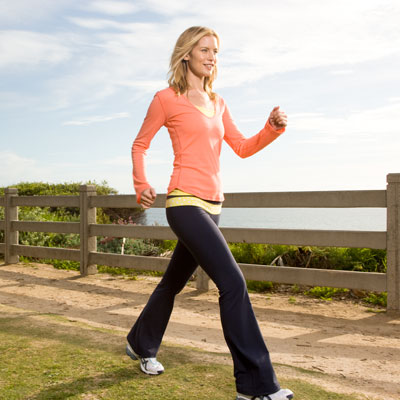
They are movements embedded in us as humans and we re-enact them on a day today basis. hey can be anything from walking:

Waving:

Fiddling with hair:
We were given a task to talk to each other and write down any habits or mannerisms that the person used when replying. I found this strange as I wouldn't normally be conscious of my mannerisms and other peoples gestures when in a convocation.


Once we had gathered information we noticed that the results varied, giving us lots of movements that we could expand and put together. We then made a short phrase and presented them to the rest of the group. I enjoyed watching them as the movements were familiar to me, but they looked like an animated version which was fresh and engaging to watch.

I think that pedestrian movements are a good tool to use however it is a fine balance to get right, I feel that if you make them too pedestrian too often then the movements become boring and ordinary.  But then if you use them in an appropriate time and slightly exaggerate or minimalize the original movement, then it gives piece an eerie interesting edge as the movements we know have been distorted.

Monday, 14 March 2016

choreography

In this class we looked into adding intent into our choreography and the realisation of its importance. We were asked to get into pairs and create a motif using a series of gestures. We showed this back and then we were told to add intent into our choreography. We did this by adding in eye contact and drawing the movements out making them longer and more controlled.

 I immediately saw a change in the movement quality it became more intricate and attention grabbing. Since partaking in this short exorcise I have tried to incorporate intent solidly into my choreography, now if I choreograph without intent I feel that the choreography looks empty and purposeless.

Choreography

Image result for trisha brown alphabet cubeWe were introduced to Trisha browns cube it is a mathematical problem solving approach to choreography. It consists of an imaginary cube around the persons centre position with 27 designated points around it. We wrote a detailed description of a body part e.g: left cheek or right middle finger for all the letters of the alphabet. Then we simply wrote a sentence and lined the numbers 1-27 up with the letters of the alphabet and the movement description. This then allowed me to gain a structure of movement from my sentence as the numbers gave me direction and the letter a body part.

I thought this was an excellent choreographic tool to use because by giving you a direction, it pushed you to use your brain to solve how you would get that body part to that position. I felt that it created a fine margin of what was allowed in my choreography but then by doing this it forced me to be creative and find new movements.

One down side I felt however was that it was a time consuming exorcise and when choreographing you are often up against deadlines and this method is not always suitable. Also for me personally I find that when choreographing using the cube, I struggle to remember the movement material without thorough rehearsals. I think that this is because I haven't made any decisions for my self as it has been done for me, so the movement has no relevance to me making it harder to remember.

I also wondered if this could effect the performance of some dancers who use this method,  if the movements have been predetermined by chance can a connection be made between the performer and the choreography.

   Image result for trisha brown alphabet cube I liked the idea of pairing to performers up to both perform their sentences. It was tricky to get two sentences that fitted together, but when we did it created a really good play ground to start developing and manipulating material.

Thursday, 10 March 2016

Choreography


In choreography we looked at the avoidance method, personally I liked avoidance tasks this is because I like my work to look powerful. This method pushed me in this direction in both solos and in group choreography and it allowed me to make some interesting choreography, as it is almost as if it is a duet but the other person or object is invisible.

This style of creating dance intrigued me as I have never created in this way before. I am a visual learner so by actually imagining a object near me that I needed to avoid, such as a charging elephant it helped me to create some interesting movement material.

I particularly liked it when we used a large object an then a small object creating a contrast in the movement quality. Another aspect that I thought was interesting was when we were avoiding a radiator, we added in the characteristics of how a person would react if they had been burnt giving the movements an interesting twist. Overall I believe it is a good creative tool to play around with to give you a starting point when initiating movement.


Another method we looked at is the replacement method, I like the simplicity of the idea it allows you to add in dancers and take them away from the motif as you please. I thought that it would be a good tool to use as it can help create high and low impact when needed for build ups and climaxes. It is conventional as it prevents the performance from looking overcrowded while also encouraging the choreographer to use the space effectively.

when adding it to a set motif I understood that it instantly gave the choreography diverse dynamics, as although unison was being used dancers where performing different sections at different levels and speeds. However when we split of to experiment with the method, I learnt that by making the piece to busy you are creating a distraction and the audience doesn't  know where to look .This is why it is important to have some dancers complimenting others, while others do not to bring it altogether as a whole.

This is also a excellent tool to use if you are creating a long piece because you can bring different dancers on at different points, giving the dancers a break in-between sections.